
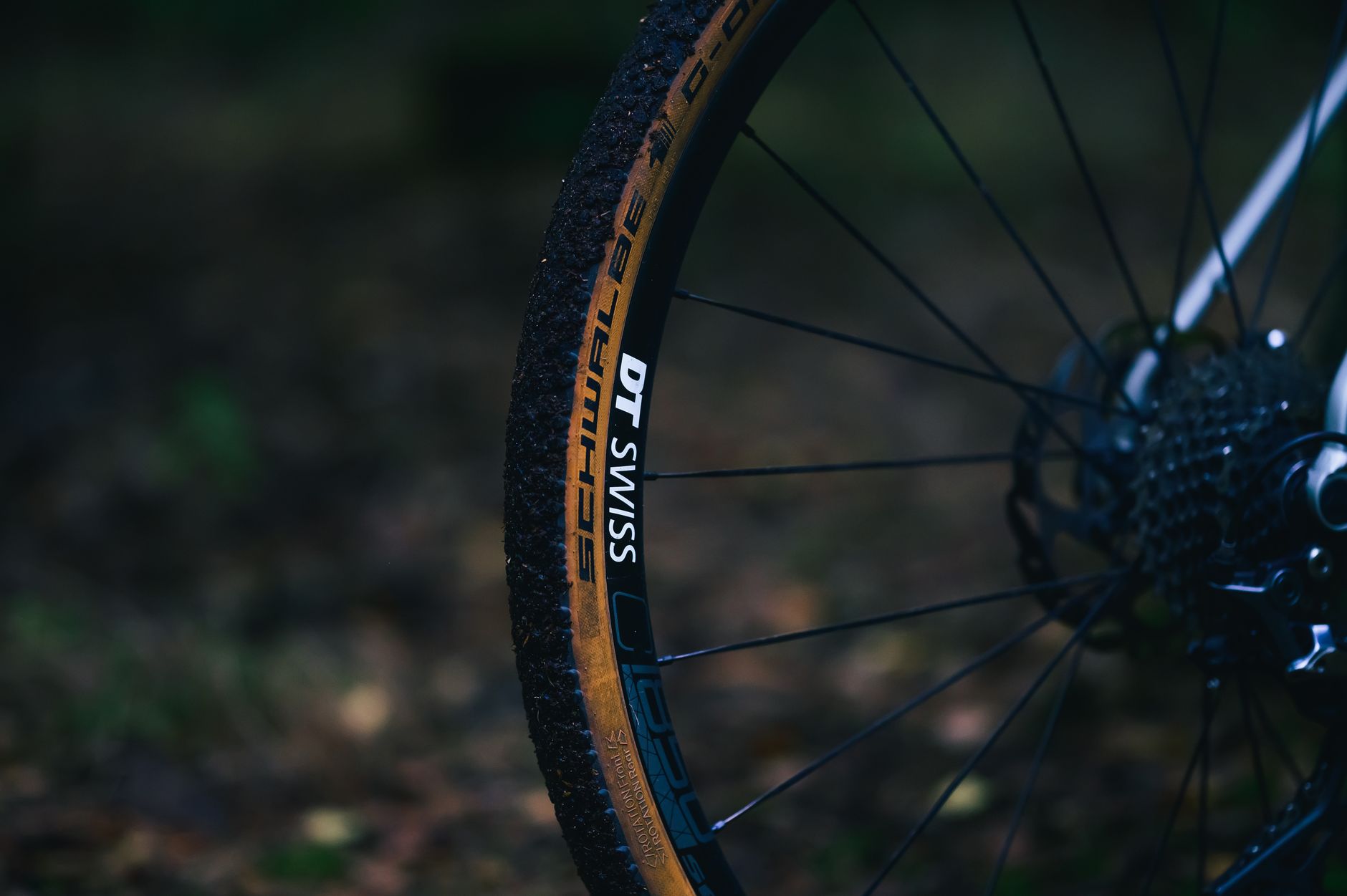
Key Takeaway: For road-focused gravel riding, choose 35–40c tires with file or light center tread and defined shoulder knobs. For mixed adventure routes, go 40–45c with moderate tread throughout. Tire width has the biggest impact on ride quality — wider is almost always more comfortable and more capable on loose surfaces, as long as it fits your frame clearance.
Why Tire Choice Matters More on Gravel Than on the Road
Road tires have very little variation in appropriate choice — nearly any quality 25–30c tire works. Gravel is different: a tire optimized for fast hardpack is genuinely wrong for loose rock or mud, and the wrong choice produces poor handling and high effort instead of confidence. Getting the match right between tread and terrain is the highest-value component decision on a gravel bike. Unlike upgrading wheels or a drivetrain, a tire swap costs under $100 and transforms how your bike handles.
File and Semi-Slick Tires: Fast Hardpack and Mixed Pavement
File tread (uniform small knobs or a nearly smooth center band) rolls efficiently on hardpack gravel, broken pavement, and firmed-up fire roads. This is the choice when speed matters and traction is secondary — long flat gravel routes, gravel sportives, and road-to-gravel mixed rides. Shoulder definition adds some cornering grip without sacrificing center-tread rolling speed.
Best width for hardpack: 35–42c. Below 35c, comfort suffers on rough surfaces. Above 42c, rolling resistance on smooth hardpack becomes noticeable.
Top picks for fast hardpack: The Panaracer GravelKing SK 38c is a benchmark fast gravel tire — low center tread with defined shoulder knobs at a competitive price. The Teravail Sparwood 38c offers a similar fast-rolling profile with excellent puncture protection. If you're doing primarily pavement-to-gravel mixed rides, the Schwalbe G-One Speed 40c rolls nearly as fast as a road tire while handling packed dirt confidently.
Moderate Tread: The All-Rounder for Mixed Routes
A moderate tread tire with a defined center knob pattern and pronounced shoulder knobs is the most versatile choice for riders who mix hardpack, loose gravel, and occasional wet or dirty sections. This tread sheds mud well enough for occasional soft conditions while rolling efficiently in dry conditions. Most quality 40–45c tires in this category handle 80% of gravel scenarios competently.
Best for: riders who don't want to own multiple tire sets and need a single tire that performs acceptably across varied conditions.
Top picks for mixed terrain: The WTB Riddler 45c is the benchmark all-rounder — capable on loose gravel, fast enough on hardpack, and widely praised for its balance at an accessible price. The Rene Herse Snoqualmie Pass 44c is a premium choice with exceptional suppleness and rolling efficiency if your budget allows. For maximum versatility under $60, the Vittoria Terreno Mix 40c handles pavement, hardpack, and loose rock without asking you to compromise.
Aggressive Tread: Loose Rock and Technical Terrain
On loose rock, chunky singletrack, or technical gravel descents, you need pronounced knobs that bite into the surface rather than skating over it. Aggressive tread increases rolling resistance on smooth hardpack but provides the cornering and braking grip that matters when conditions become technical. Most aggressive gravel tires run 42–50c.
Aggressive tread typically requires more frame clearance — check your bike's maximum tire clearance and confirm the tire fits with at least 5mm on each side before purchasing.
Top picks for aggressive terrain: The Specialized Pathfinder Pro 42c is the go-to for technical gravel and light singletrack — grippy side knobs, confidence-inspiring on loose descents, and still manageable on hardpack connections between technical sections. The Maxxis Rambler 42c is the mountain bike brand's gravel answer: assertive tread pattern borrowed from MTB DNA, excellent in mud and loose rock.
Tire Width and Pressure: Getting Both Right
Wider tires run at lower pressures, which increases comfort and improves grip on loose surfaces. The practical effect is significant — a 40c tire at 28 PSI handles rough terrain meaningfully better than a 35c tire at 40 PSI, with lower perceived effort over long distances.
Tubeless allows lower pressures without pinch flat risk. On gravel, the combination of 40–45c tires and tubeless at 25–35 PSI (depending on rider weight) is the most capable all-around setup available. As a starting point: riders under 65kg can run 5 PSI lower than the ranges above; riders over 90kg should add 3–5 PSI for adequate support on rough descents.
Frequently Asked Questions
What's the widest tire my gravel bike can fit?
Check your frame and fork clearance specifications. Most modern gravel bikes accept 40–47c; some adventure frames fit 50c or wider. The tire needs at least 4–5mm clearance on each side to prevent mud or debris from jamming. If running wider tires in muddy conditions, add extra clearance tolerance.
Is tubeless setup worth the effort on gravel?
Yes, genuinely. Lower pressures, sealant that handles small punctures, and the elimination of pinch flats justify the setup time. Most modern gravel wheels and tires are tubeless-ready. Seal the bead, add 2–3 oz of sealant, and you're set for the season with occasional sealant top-ups.
How much do gravel tires affect speed?
Tire choice is the biggest speed variable on gravel after fitness. The right width at the right pressure rolls faster with less effort than a too-narrow tire at high pressure. A quality gravel tire at optimal width and pressure can make a 5–10% difference in perceived effort on long routes compared to a poor choice.
Should I run the same tires front and rear?
Matching front and rear is fine for most gravel riding. Some riders run a slightly more aggressive tire up front (for cornering grip) and a faster-rolling tire in the rear (where most weight sits and rolling resistance matters most). If you're only upgrading one tire, prioritize the front — that's where handling confidence comes from.